Iceland, the “Land of Fire and Ice,” is one of the few places on Earth where travelers can hike across freshly formed lava fields, witness erupting volcanoes, and trek into craters — all within a single journey. Volcano hiking tours in Iceland offer a truly immersive and otherworldly adventure that connects travelers to the primal power of the Earth. With its ever-changing volcanic landscape, Iceland provides not only scenic thrills but also deep geological education and unforgettable memories.
Whether you’re an adventurer seeking raw landscapes or a curious traveler exploring the natural phenomena that shape our planet, volcano hiking in Iceland opens the door to extraordinary experiences. This article explores everything from the top volcano trails and real-world use cases to the technology that enhances your journey and the lasting benefits of such explorations.
Why Iceland Is the Perfect Destination for Volcano Hiking Tours
Iceland’s position atop the Mid-Atlantic Ridge makes it one of the most volcanically active regions in the world. The island is constantly being reshaped by tectonic and volcanic activity, with over 130 active and dormant volcanoes scattered across the country. This geological dynamism has carved out some of the most stunning hiking terrains on the planet.
Unlike typical mountain hikes, Icelandic volcano hikes traverse landscapes like:
-
Steaming geothermal valleys
-
Craters with glowing lava remnants
-
Expansive black sand deserts formed by past eruptions
-
Moss-covered lava fields stretching as far as the eye can see
These hikes provide not just visual spectacle, but also a visceral connection to the Earth’s geological forces.
Real-World Volcano Hiking Experiences in Iceland
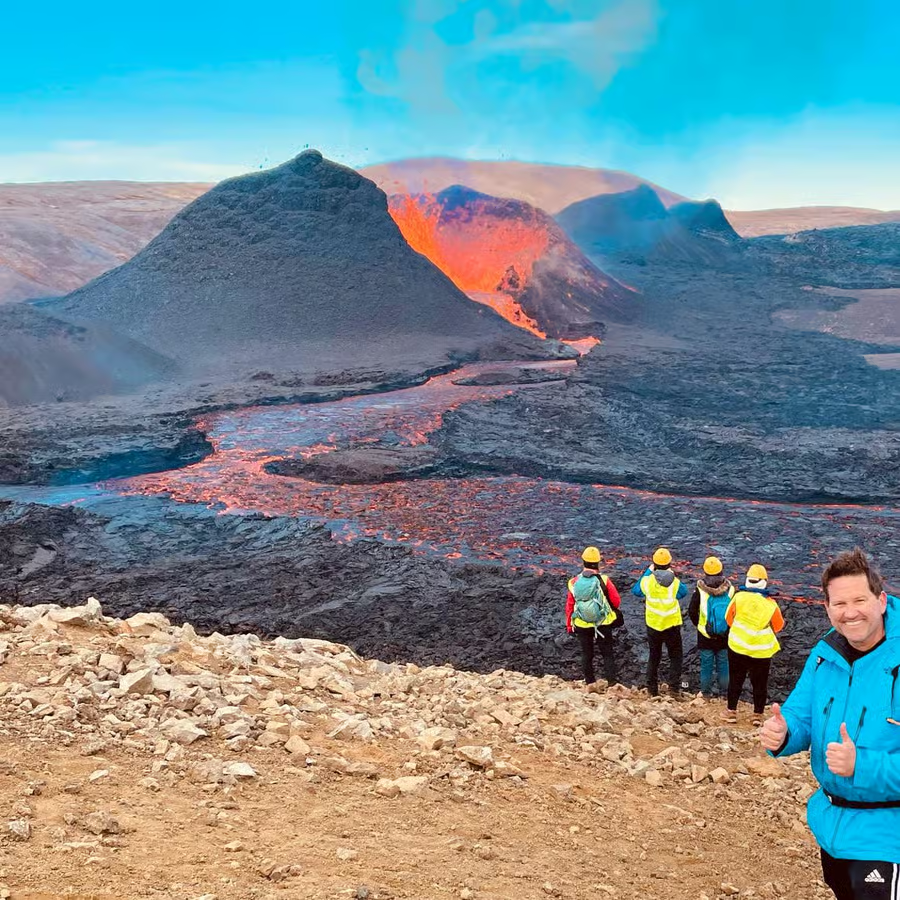
Iceland offers several accessible and awe-inspiring volcano hikes, each delivering a unique blend of natural beauty, geological wonder, and physical challenge.
Fagradalsfjall Volcano (Geldingadalir)
Fagradalsfjall, in the Reykjanes Peninsula, erupted in 2021 after being dormant for over 6,000 years. It quickly became one of the most iconic volcano hikes in Iceland due to its proximity to Reykjavík and dramatic lava flows.
The hike to the eruption site is moderate in difficulty, with well-marked trails. Even though the eruption has ceased, the newly formed lava fields still radiate heat and provide insight into post-eruption volcanic landscapes. Guided tours often include explanations of the area’s seismic history, lava types, and tectonic significance.
Hverfjall Crater
Located in northern Iceland near Lake Mývatn, Hverfjall is a massive, perfectly circular tephra cone volcano that formed over 2,500 years ago. Hiking to the rim provides panoramic views of the surrounding geothermal region.
Though the climb is steep, it is relatively short, making it suitable for most travelers. The symmetrical shape of the crater and its wide diameter create a surreal, moon-like atmosphere that feels like stepping into another world.
Askja Caldera and Víti Crater
Askja is situated in the remote Icelandic Highlands and is known for its dramatic terrain and remote access. The region was used by NASA to train Apollo astronauts due to its resemblance to lunar surfaces.
The Víti Crater, a striking turquoise geothermal lake within Askja, is a highlight of the hike. The journey to Askja typically requires a 4×4 vehicle and involves crossing glacial rivers, but the reward is unparalleled solitude and views of volcanic wilderness far from tourist crowds.
Eldfell Volcano – Heimaey Island
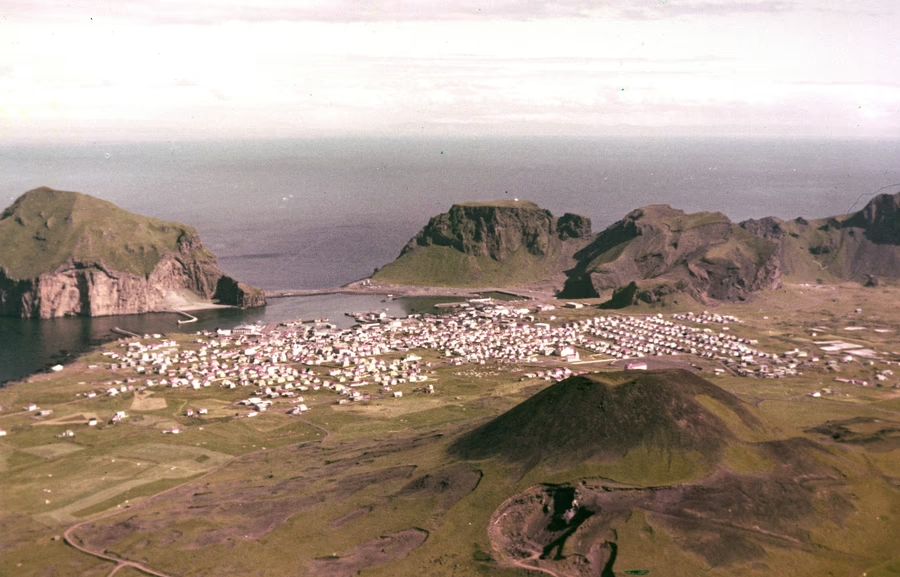
Eldfell famously erupted in 1973, threatening the entire town of Heimaey in the Westman Islands. The eruption created a brand-new volcano, and today, hikers can walk up its red slopes to witness both newly formed lava fields and the resilience of the town below.
This hike is relatively short but steep, offering sweeping ocean views and dramatic contrasts between fiery volcanic terrain and the lush coastal environment. It’s a perfect combination of geological exploration and human history.
Practical Benefits of Using Technology on Volcano Hiking Tours
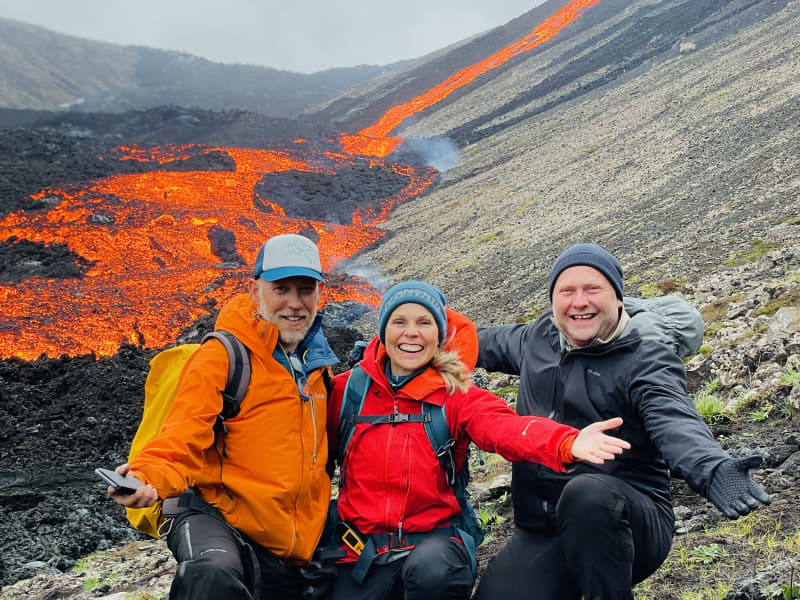
Technology plays a crucial role in enhancing safety, navigation, and education during volcano hiking adventures in Iceland. From GPS tools to real-time eruption monitoring, digital tools help ensure that these treks are as safe and enriching as they are exciting.
Real-Time Volcanic Monitoring
Iceland’s Meteorological Office uses seismographs, GPS stations, and gas sensors to monitor volcanic activity in real time. Tour operators often tap into this data to adjust hiking routes and keep trekkers informed of potential hazards. This enhances safety and decision-making for both guides and hikers.
GPS and Offline Trail Maps
Because many volcano hiking trails lie in remote or unmarked regions, GPS navigation apps like Gaia GPS or AllTrails are invaluable. These apps allow hikers to:
-
Download maps for offline use
-
Track elevation and distance
-
Navigate safely even without cell service
This reduces the chances of getting lost and increases confidence on the trail.
Augmented Reality (AR) and Geology Apps
Apps like Volcanoes & Earthquakes or Geology Toolkit help users identify volcanic features, understand eruption timelines, and learn about local rock formations during their hike. This brings a rich educational layer to the experience.
Real-World Use Cases of Volcano Hiking in Iceland
Adventure Tourism and Personal Fulfillment
Volcano hiking tours offer more than physical activity—they deliver personal transformation. The vastness and intensity of these landscapes push personal limits, creating moments of awe and emotional release.
Travelers often describe volcano hikes as spiritually grounding, especially in places like Askja or Geldingadalir, where the silence is broken only by wind and the crackling of cooling lava.
Environmental Awareness and Education
Seeing active volcanoes and the aftermath of eruptions in person inspires a deeper appreciation for the Earth’s forces and the fragility of ecosystems. Volcano Hiking Tours in Iceland. Hikers often come away with a greater desire to protect natural environments, reducing their carbon footprint and supporting conservation initiatives.
Photography and Storytelling
The stark, dramatic terrain of Iceland’s volcanoes offers incredible photographic opportunities. Many hikers capture images and videos that are later used for travel blogging, scientific storytelling, or personal documentation of rare geological moments.
Team Building and Group Adventures
Volcano hikes are increasingly popular for group retreats, where participants engage in guided treks that foster teamwork, trust-building, and shared achievement. This is particularly useful for corporate wellness programs or school field trips focused on environmental science.
Practical Advantages of Joining Volcano Hiking Tours in Iceland
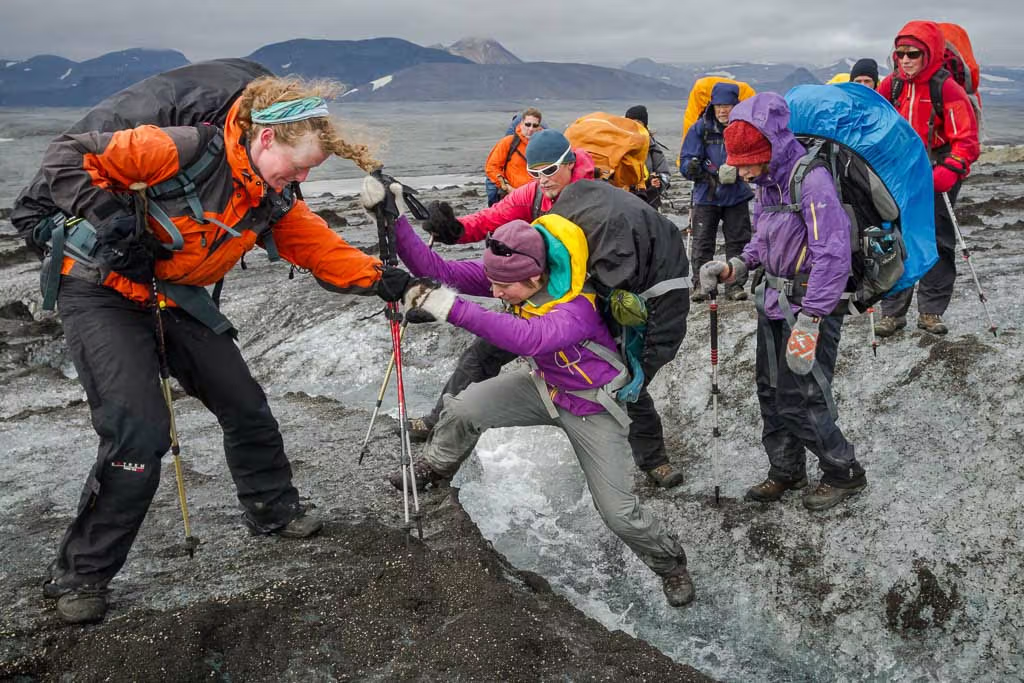
Expert Guidance and Geological Insights
Tour guides in Iceland are typically trained in geology and volcanology, meaning hikers don’t just walk the trail—they gain insights into how volcanoes form, erupt, and influence ecosystems. This turns a hike into a living classroom.
Safety in a Volatile Landscape
The Icelandic terrain can change quickly due to volcanic activity, weather, and geothermal shifts. Guided tours ensure that you stay informed of hazards, stay on safe paths, and respond correctly in emergencies.
Logistics Simplified
Many volcano trails require 4×4 vehicles, river crossings, or remote access. Tours handle the logistics, allowing hikers to focus on the experience instead of worrying about navigation, permits, or transportation.
Cultural and Historical Context
Volcano hikes often include stories of Icelandic folklore, historic eruptions, and local survival tales, enriching the trek with a sense of place and cultural significance.
Use Cases: What Problems Volcano Hiking Tours Help Solve
Problem 1: Nature Deficit in Urban Lives
Modern life often detaches people from the natural world. Volcano hiking reconnects participants with raw, untouched environments, reducing stress and improving mental health.
Problem 2: Lack of Experiential Education
Textbook geology can be abstract. Hiking through volcanic terrain brings geological theories to life, aiding students, teachers, and enthusiasts in hands-on learning.
Problem 3: Unsustainable Mass Tourism
Volcano hikes, especially those led by local guides, support eco-conscious tourism that limits environmental impact and benefits remote communities through responsible travel.
FAQ
Q1. Is it safe to hike around active volcanoes in Iceland?
Yes, when done through licensed tour operators and under proper guidance. The Icelandic government and scientific agencies closely monitor seismic and volcanic activity to ensure public safety.
Q2. Do I need to be in top physical condition to join a volcano hike?
Not necessarily. Many volcano hikes are moderate and suitable for beginners, though some, like Askja or Hverfj, all require good stamina due to uneven terrain or steep inclines.
Q3. Can I hike to an erupting volcano?
Depending on safety conditions and official advisories, it is sometimes possible to view eruptions from safe distances. For example, during the Fagradalsfjall eruption, visitors were allowed to hike to designated viewing areas.