Alaska’s sprawling wilderness is a magnet for adventurers, but nothing quite compares to the surreal experience of glacier hiking. With a landscape shaped by ice, time, and nature’s raw forces, glacier hiking experiences in Alaska offer travelers the opportunity to traverse frozen rivers, explore ancient ice caves, and connect deeply with one of the Earth’s most powerful natural wonders.
This comprehensive guide explores what makes Alaska’s glaciers so special, the technology enhancing these treks, must-visit glacier locations, real-world gear examples, and how these experiences offer both thrill and transformation.
Why Glacier Hiking in Alaska Is Unlike Anywhere Else
Alaska is home to more than 100,000 glaciers, covering over 5% of the state’s land area. These glaciers are living, moving landscapes that reveal the slow power of nature. Glacier hiking here isn’t just a physical activity—it’s a visual and sensory journey into ice-blue crevasses, frozen waterfalls, and millennia-old formations.
What sets Alaska apart is the accessibility of its glaciers. Many, like Exit Glacier and Matanuska, can be reached with moderate hiking or guided tours, allowing people of varying experience levels to witness glacial beauty up close. The backdrop of vast valleys, towering ice walls, and wildlife sightings like mountain goats or bald eagles makes every step feel cinematic.
Benefits of Technology in Glacier Hiking Adventures
Enhanced Navigation and Safety
Garmin GPSMAP 67i Handheld GPS Device
Technology like handheld GPS units ensures hikers can safely navigate shifting glacial terrain, which often lacks clear trails. The Garmin GPSMAP 67i not only provides real-time location tracking but also two-way messaging in case of emergencies, essential in remote Alaskan regions.
By using GPS systems, hikers can follow predefined routes, avoid crevasses, and log waypoints, increasing both safety and peace of mind.
Real-Time Weather and Avalanche Monitoring
Kestrel 5500 Weather. The weather in glacial regions can change dramatically. Devices like the Kestrel 5500 offer precise readings on wind speed, temperature, humidity, and barometric pressure, helping guides make informed decisions in real-time.
Advanced hikers and tour operators rely on this data to assess avalanche risks and anticipate incoming storms, allowing for safer scheduling and route adjustments.
Smart Wearables and Health Monitoring
Smartwatches equipped with GPS, altimeters, and heart rate monitoring—like the Garmin Fenix 7—help hikers track altitude gain, monitor exertion levels, and keep pace over rugged terrain. These tools are especially helpful for glacier hikes that involve long distances or elevation shifts.
By tracking real-time health metrics, adventurers can avoid overexertion and altitude sickness, leading to safer and more enjoyable treks.
Best Glacier Hiking Destinations in Alaska
Matanuska Glacier – Southcentral Alaska
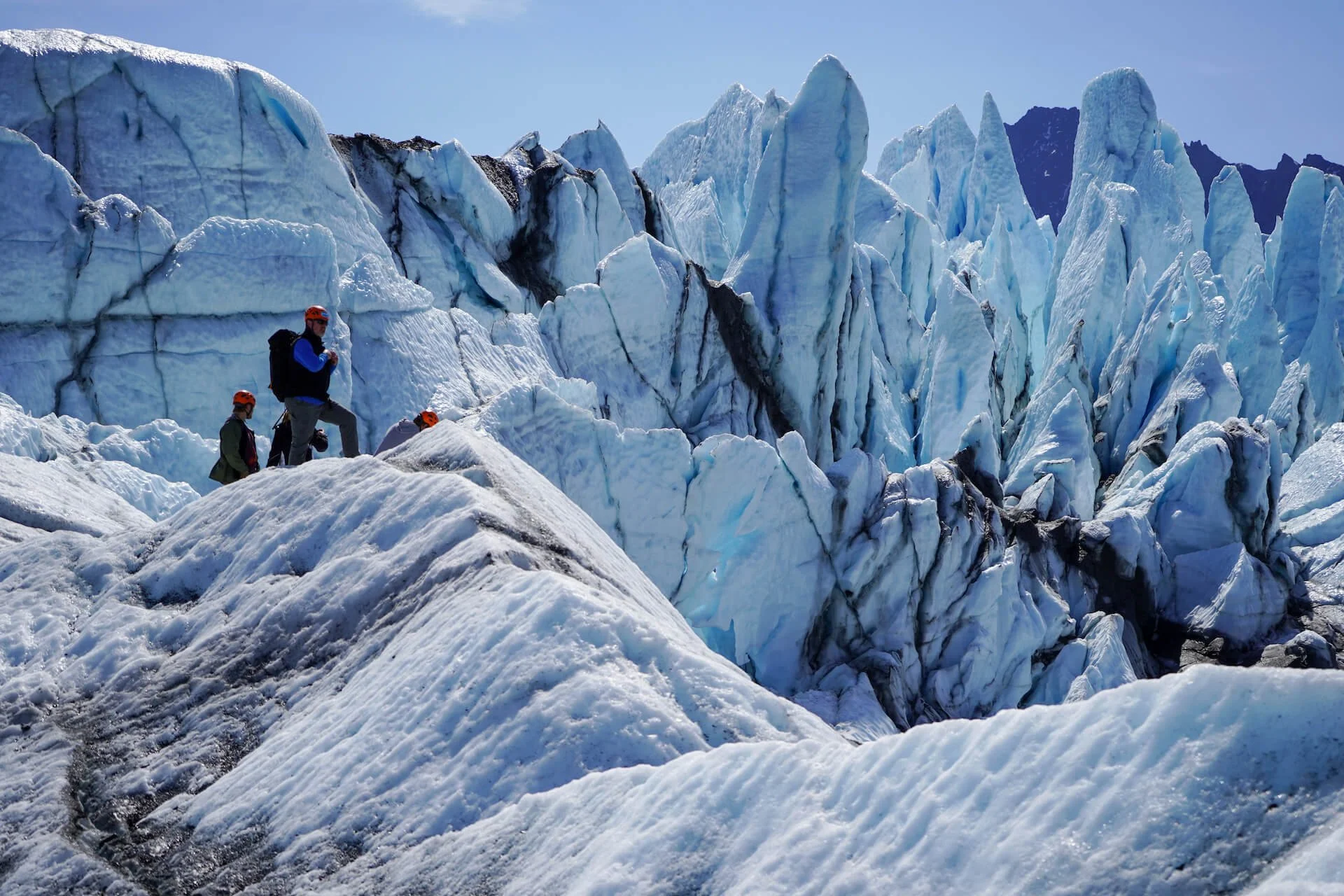
Matanuska is one of the few glaciers in Alaska accessible by road, located about two hours from Anchorage. At 27 miles long and 4 miles wide, it’s ideal for half-day and full-day hikes.
Guided tours take visitors across the icy surface to view seracs (ice towers), crevasses, and deep blue meltwater pools. The terrain here is relatively friendly for beginners, but crampons and safety gear are essential.
Matanuska also offers a variety of guided experiences ranging from family-friendly walks to technical ice-climbing excursions, making it a versatile destination for glacier enthusiasts.
Exit Glacier – Kenai Fjords National Park
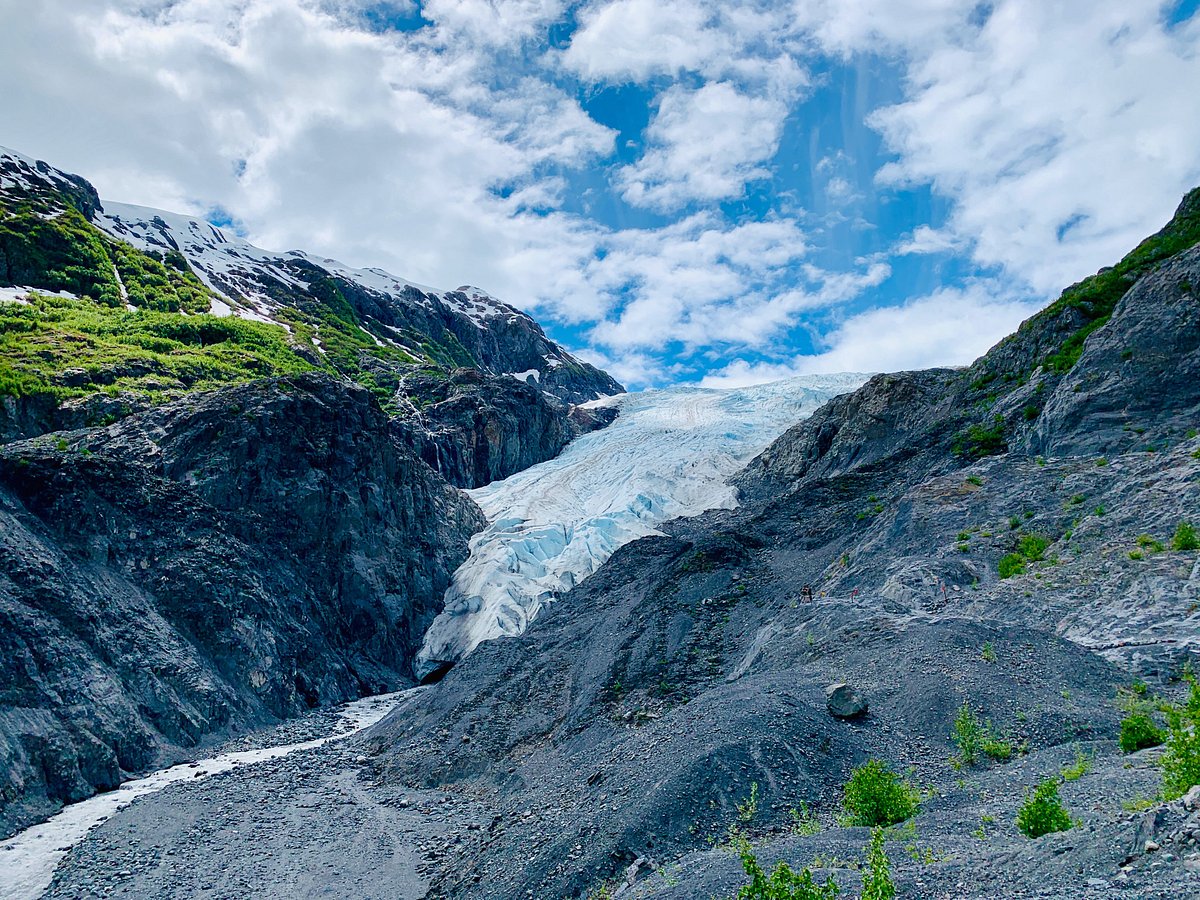
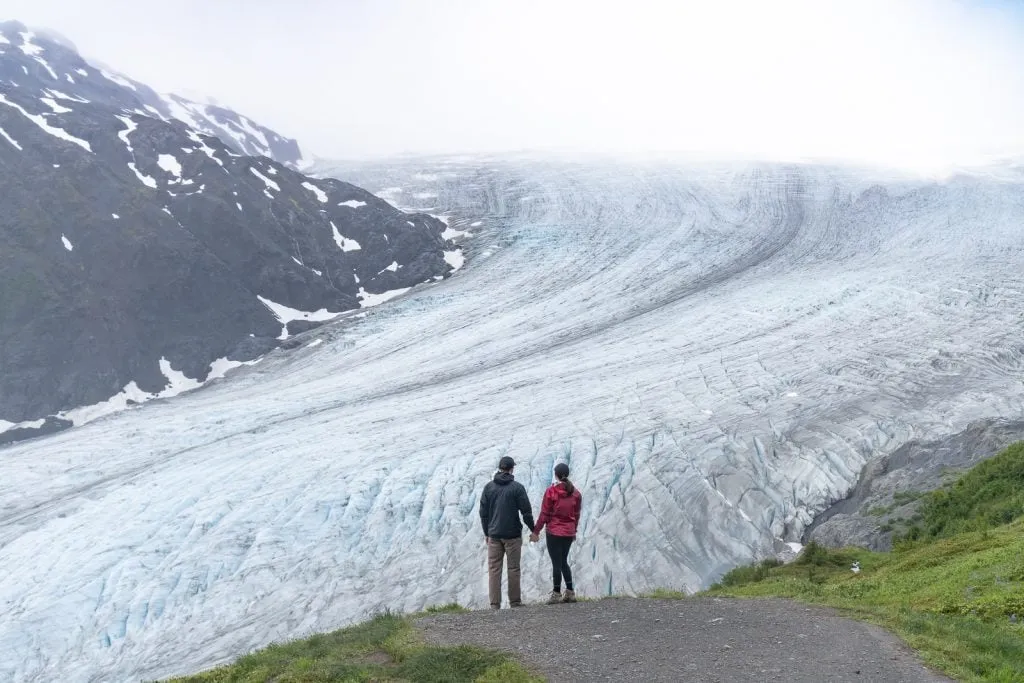
Exit Glacier is one of Alaska’s most visited and studied glaciers. Its proximity to Seward and well-maintained trail system make it a great option for beginner and intermediate hikers.
From the trailhead, visitors can hike to various viewpoints or join guided trips that go directly onto the glacier. Rangers and naturalists often accompany hikes here, offering educational insights into glacial science and climate impact.
Exit Glacier is also one of the few places where hikers can witness rapid glacial recession, a stark and sobering testament to climate change.
Harding Icefield Trail – Kenai Peninsula1
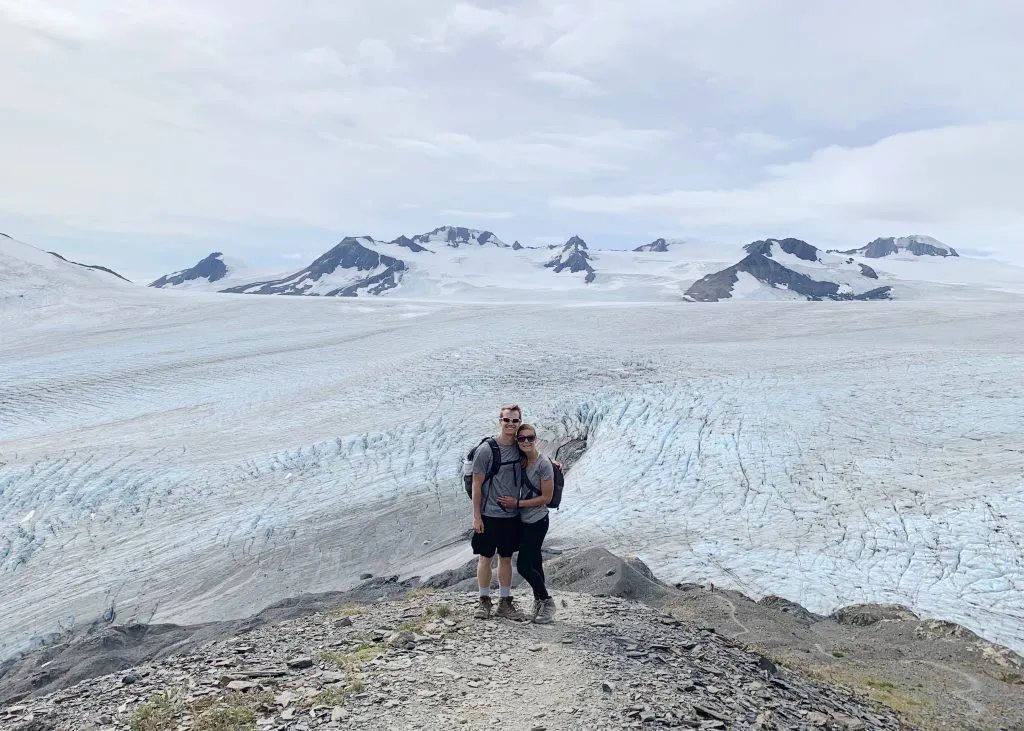
Root Glacier offers one of the most pristine glacier hiking experiences in Alaska. Accessible via the historic town of McCarthy, this glacier is less crowded, offering solitude and untouched beauty.
Hikers can explore the glacier’s winding rivers, shimmering ice formations, and nearby ice caves. The contrast of ice and volcanic rock, combined with Wrangell’s dramatic mountain backdrop, makes for stunning photography and immersive trekking.
Local outfitters offer guided hikes, ice climbing, and even multi-day expeditions here for seasoned hikers.
Harding Icefield Trail – Kenai Peninsula2
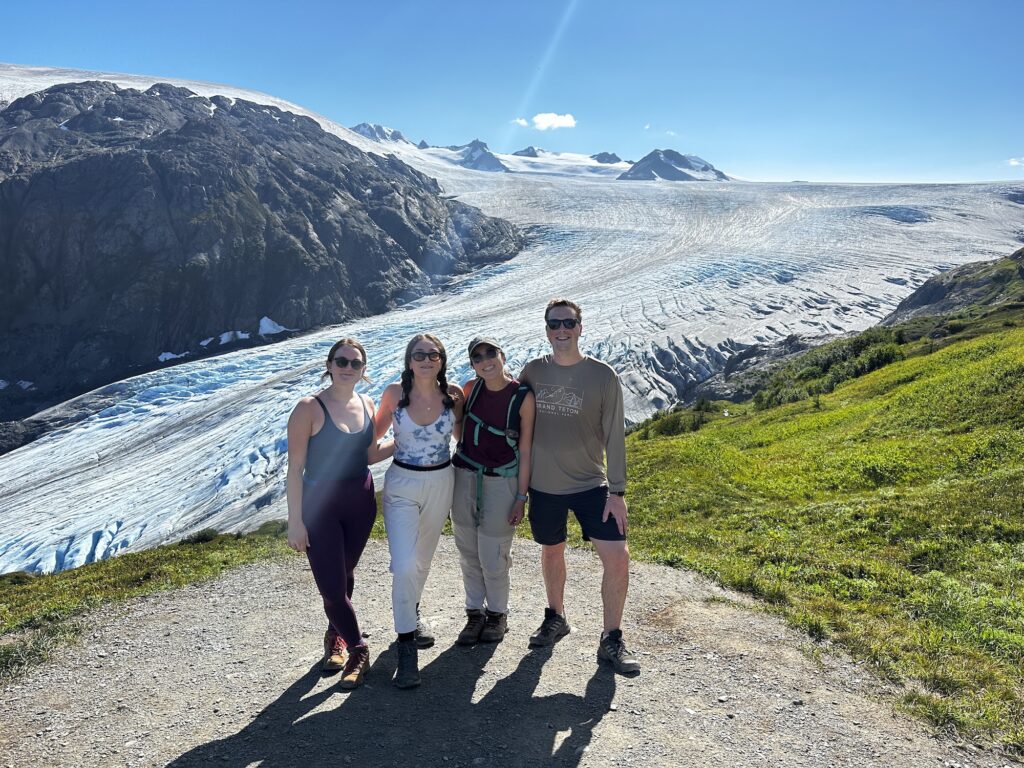
Accessible only by train or helicopter, Spencer Glacier offers a sense of adventure right from the start. Located south of Anchorage, this glacier is surrounded by spectacular alpine scenery and reflective glacial lakes.
Once at the base, hikers can explore mellow ice fields or opt for technical climbs. Its remoteness and exclusivity make Spencer Glacier ideal for couples or groups seeking a more private experience with nature.
Harding Icefield Trail – Kenai Peninsula3
Although not a hike directly on a glacier, the Harding Icefield Trail offers sweeping panoramic views of one of the largest icefields in North America. This 8.2-mile round-trip climb takes hikers through lush forests, alpine meadows and ends with breathtaking views of a seemingly endless expanse of ice.
Experienced hikers can use this trail as a jumping-off point to access glacier mountaineering adventures with proper equipment and guides.
Practical Benefits of Glacier Hiking
Physical Health and Endurance
Glacier hiking builds cardiovascular health, strengthens lower-body muscles, and boosts endurance. The uneven terrain challenges balance and agility, making it an excellent full-body workout. High-altitude glaciers also improve lung capacity over time.
Mental Rejuvenation and Mindfulness
Walking across centuries-old ice in complete silence offers a form of mental clarity and emotional release that’s hard to find elsewhere. The combination of physical exertion and natural beauty creates a meditative state that supports emotional well-being.
Educational and Environmental Awareness
Many glacier hikes are led by trained naturalists or geologists. These experts provide insight into glacial formation, retreat, and the ecological impact of climate change. Hikers come away not just refreshed, but also informed and inspired to protect natural environments.
Use Cases: Real-World Applications and Impact
Team Building and Leadership Retreats
Several organizations use glacier hiking in Alaska for corporate leadership and team-building retreats. The physical challenge, remote location, and reliance on communication make it ideal for fostering group cohesion and personal growth.
These experiences encourage problem-solving, adaptability, and resilience in ways that conventional workshops simply can’t match.
Therapeutic Adventures and Personal Healing
For individuals recovering from personal loss or trauma, glacier hiking can be transformative. The vastness and beauty of Alaska’s ice fields offer a symbolic sense of renewal and perspective. Programs led by outdoor therapists combine wilderness therapy with physical exertion to support healing journeys.
Photography and Filmmaking Expeditions
Professional photographers and filmmakers use Alaska’s glaciers as subjects for nature documentaries, art installations, and climate awareness campaigns. Glacier Hiking Experiences in Alaska. Their work helps raise public understanding of glacial recession and environmental change.
Using drones, stabilizers, and polarizing lenses, content creators capture textures and colors of glacial landscapes that change by the hour.
FAQs
Q1: Do I need prior hiking experience to go glacier hiking in Alaska?
A: Not necessarily. Many glacier hikes cater to beginners and include safety equipment and experienced guides. Glacier Hiking Experiences in Alaska. However, being in decent physical condition and having proper gear is important. For more technical hikes, prior hiking or ice climbing experience is recommended.
Q2: Is glacier hiking dangerous?
A: While glacier hiking does come with risks such as hidden crevasses and unstable ice, these can be mitigated with proper equipment, guide supervision, and weather awareness. Reputable tour operators ensure safety through briefings, equipment checks, and real-time route adjustments.
Q3: What is the best time of year for glacier hiking in Alaska?
A: The best time is between June and early September, when weather conditions are more stable, and trails are fully accessible. Some glaciers are accessible year-round with special gear, but guided summer hikes offer the safest and most scenic conditions.